Inspiration Is Not Imitation
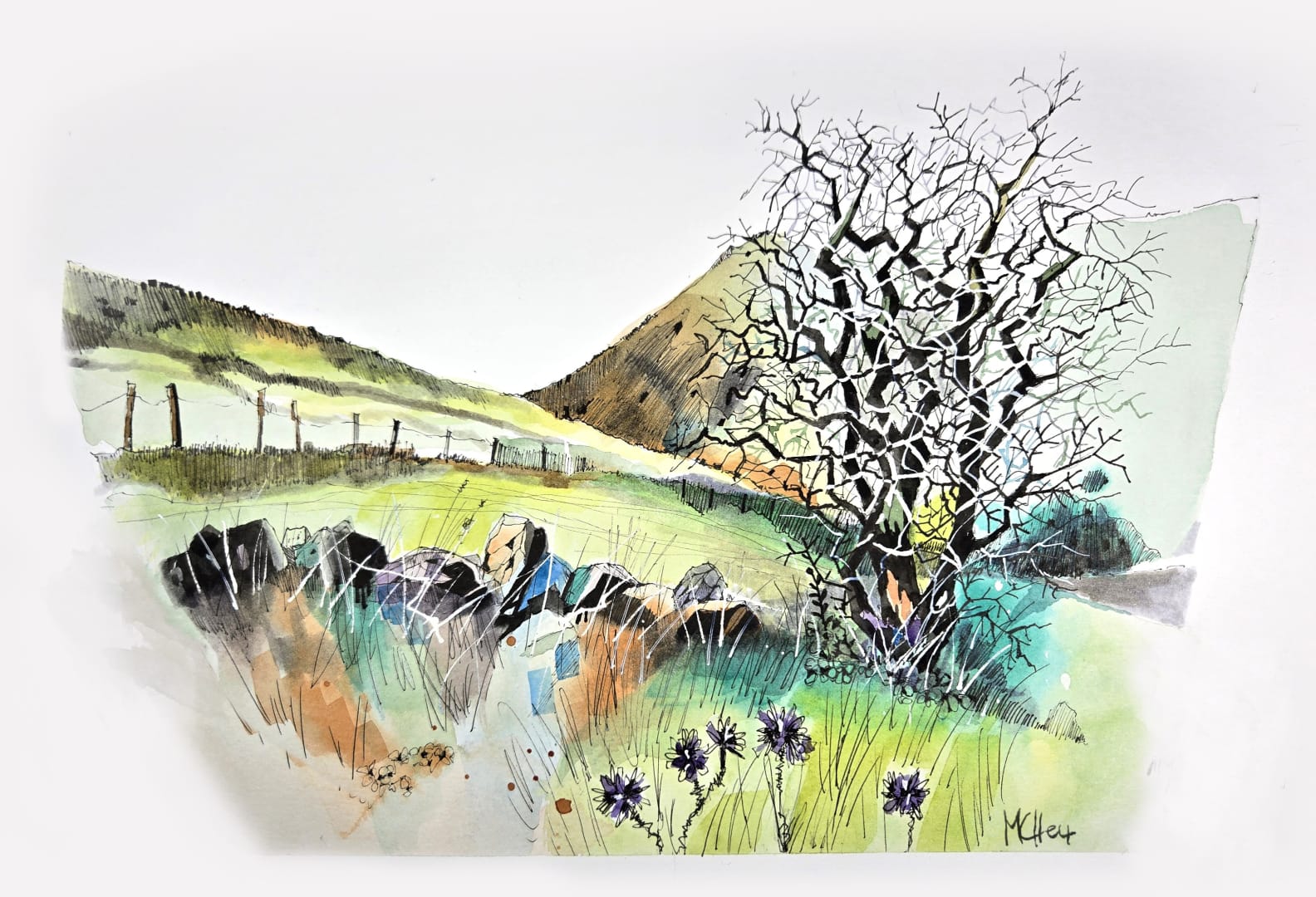
Being inspired doesn’t mean replication. It’s about seeing new possibilities. When you notice a colour mix you’d never have tried, or a way someone simplifies a jumble of rooftops, it nudges you to experiment in your own way. Borrowing techniques is part of learning. Your sketch becomes uniquely yours the moment your hand moves differently, your lines wobble, or your colours blend in a way no one else’s do.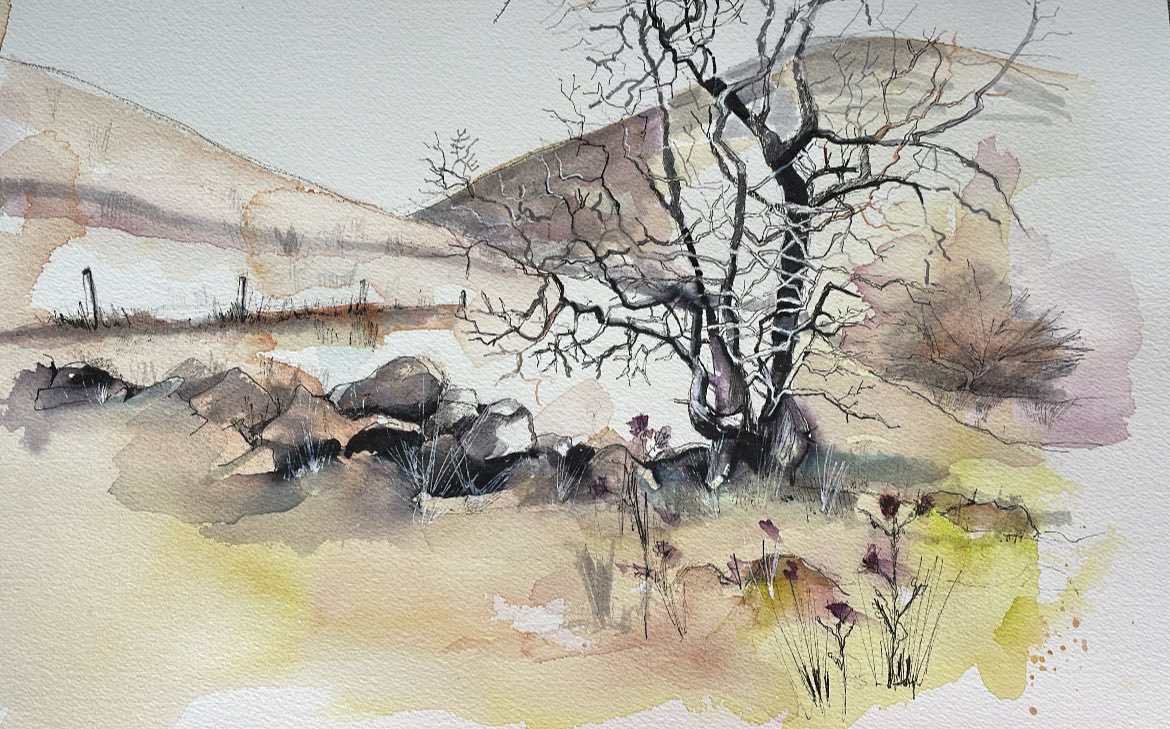
Real Examples from the Urban Sketching Community
We see this play out again and again in our Urban Sketch PLUS community. Recently, Ian shared his sketch of Aber Falls in Snowdonia, along with the reference photo, so others could try it for themselves. Many members posted their own versions. But what stood out most was Gabriella’s response to Anja’s take on the same scene. Here’s what she said:““I tried the assignment Aber Falls. Anja's photos in progress helped me to start with the line drawing and then adding colours. I had some trouble with the white lines: I used W&N permanent white designer gouache which should be opaque. But when the colour dried it faded and finally I added fine lines with my white gel pen. Although my painting is not perfect I am still very happy with the result. I hope you like it!"”
– Gabriella

How to Borrow Without Losing Your Style
If you’ve ever worried that being influenced by another artist will drown out your own voice, here are some gentle tips:
- Pick one thing to borrow.
Maybe it’s a colour choice, a hatching technique, or leaving a patch of paper unpainted. Focus on that one aspect and let the rest flow naturally. - Keep your mistakes.
Wobbly shadows, patchy washes, or the line that went rogue often add the most character. When Gabriella swapped gouache for a gel pen, she didn’t fail, she adapted. That flexibility is a skill worth practicing. - Share your process.
Posting a work-in-progress can spark ideas for others. Sometimes, sharing the “messy middle” gives someone else permission to begin.
The Joy of Sketching Together
The beauty of urban sketching is this cycle of inspiration.
We watch, we learn, we try, we stumble, and we create something uniquely ours.
Community doesn’t make us clones. It reminds us that sketching is easier, and a lot more fun, when we do it together.
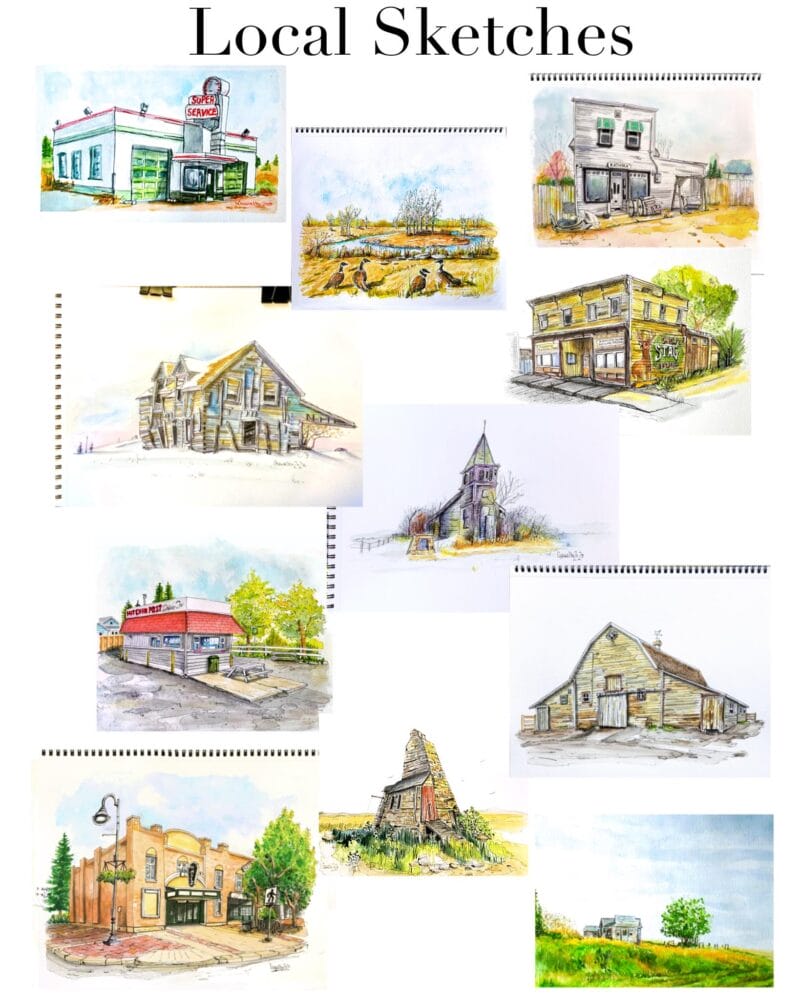
So the next time you feel stuck, flip through your sketchbook or scroll through the Student Gallery. Notice what catches your eye, then let that little spark carry you forward.
And if you feel brave, share your story. You never know who might find the encouragement they need in your imperfect, wonderful page.

Ready to learn more?
Learn the art of urban sketching with Ian Fennelly in our Beginner’s course as he guides you through 47 easy-to-follow lessons, with practical exercises, that transform you from complete beginner to skilled urban sketcher!
- More Blog Posts -

How to Draw Signs and Lettering in Your Urban Sketches
Plain letters first, chunky letters second, and always check the spelling.
Read more
Why Your Landscape Sketches Look Flat (And The Fix)
Perspective does most of the work in a street and almost none of it in a field. Here is what Ian does instead, and the four ways he separates a foreground from a background.
Read more
Our 4 Week Urban Sketching Experience: What Riomaggiore Taught Us
The lessons that came back again and again from the hardest scene we have set.
Read more
Why Sketching the Same Scene Twice Teaches You More Than Moving On
Most sketchers move straight to a new subject. Here is what the second attempt gives you that the first cannot.
Read moreDid you enjoy this article?
Thanks for your feedback!
